Authentic UMF™ Certified
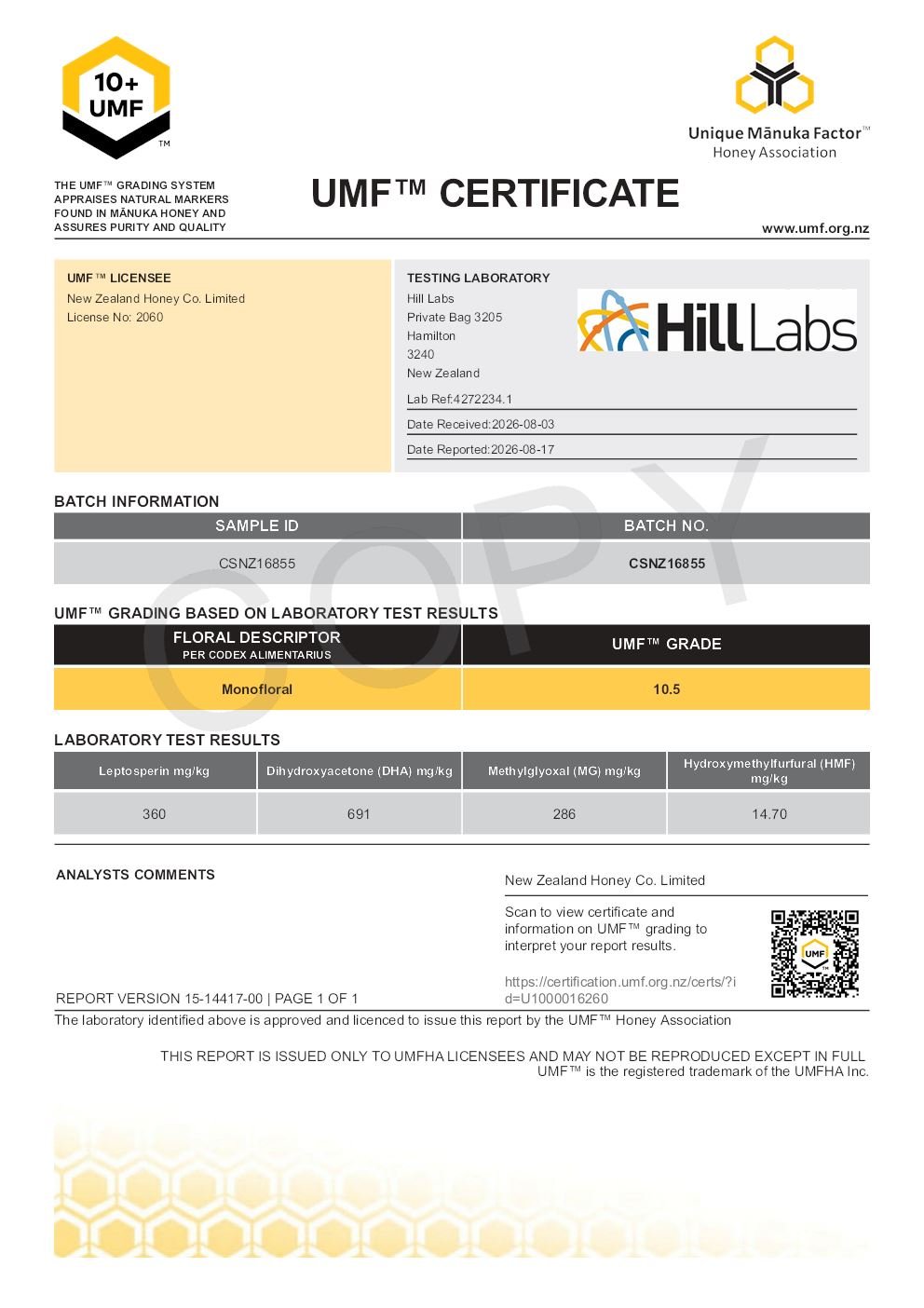
UMF™ Certificate: Batch ID: #CSNZ16855
Testing Laboratory

Valid Certificate Search
Monofloral
UMF™ GRADE
10.5+

Product Verification
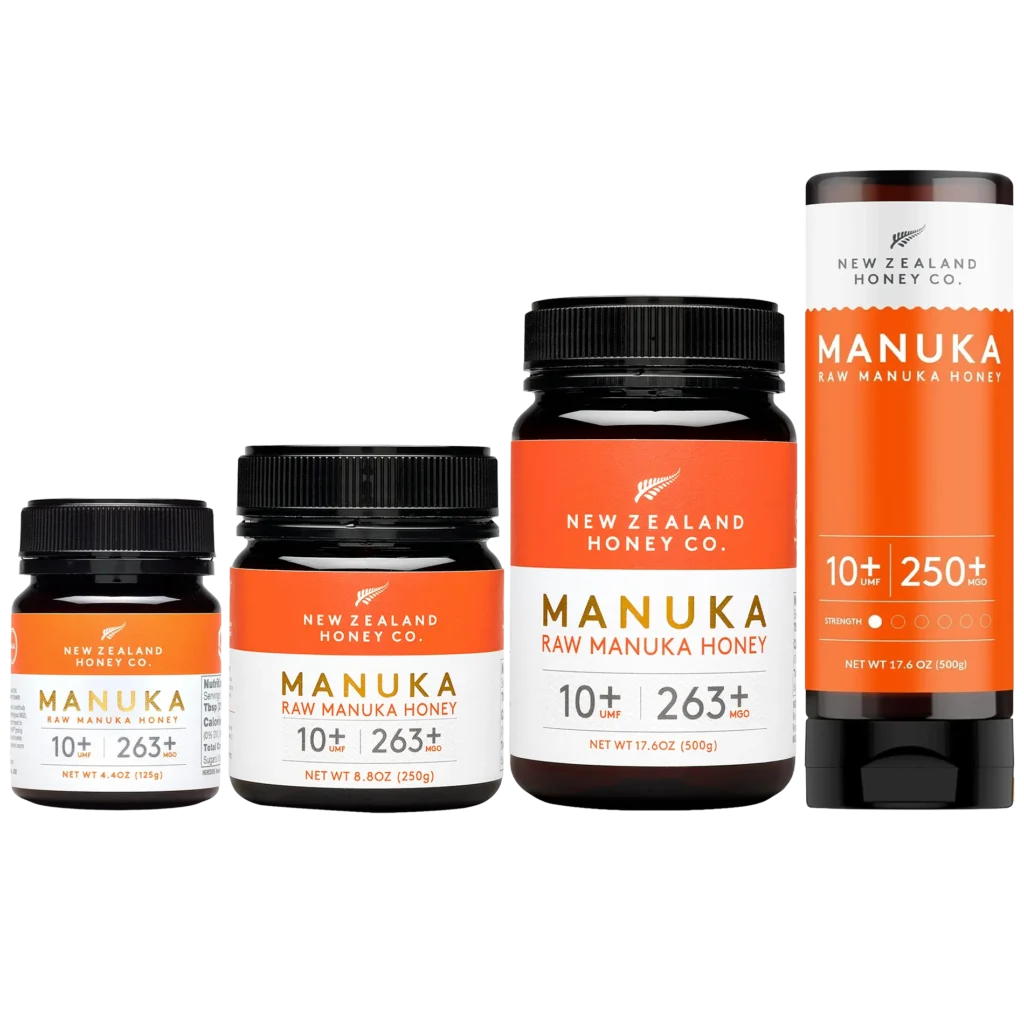
Compare your jar to the product shown below. If it doesn’t match, contact us.
Official UMF™ Certificate
This is the official UMF Certificate for the jar you have purchased.
Sample ID: CSNZ16855
CSNZ16855
Country of Origin
New Zealand
Click Image to Zoom
Region of Hives
Region where your Mānuka Honey was sourced:
This certified Mānuka honey (Sample ID CSNZ16855) carries a UMF 10.5 grade — the UMF number represents measured, non-peroxide activity that helps distinguish genuine Mānuka potency — and an MGO (methylglyoxal) level of 286 mg/kg, which is an indicator of its antibacterial activity. At this MGO level (below 500), it’s especially well suited to everyday uses: enjoy it on toast, in drinks, for baking or as part of your skincare routine. The Leptosperin level of 360 mg/kg serves as a botanical marker confirming this is genuine Mānuka from New Zealand. Hill Labs in New Zealand independently tested the jar, and the UMF licencee, New Zealand Honey Co. Limited, is committed to transparent testing and responsible sourcing. No DHA (the natural precursor that converts into MGO as honey matures) value is shown on this certificate; DHA measurements can help predict how MGO may change over time, but aren’t always reported. Overall, these results give a clear, trustable picture of quality and everyday versatility.
In short: A trustworthy UMF 10.5 Mānuka with MGO 286 mg/kg — great for food, daily wellness, baking and skincare from a reputable New Zealand producer and lab.
This certification confirms the authenticity and quality of your Mānuka honey purchase.
All testing performed by independent, accredited laboratories.
This Mānuka honey is

Mānuka Honey Certification Details
Sensory Profile
Colour
Flavour
Texture
Mānuka Honey FAQ
Why is this honey so expensive?
It’s harvested in remote areas of New Zealand and undergoes rigorous independent testing for quality, purity, and potency — all of which adds cost. Rarity and global demand also play a role.
The colour of my honey looks different. Why?
Colour can vary naturally by batch and region. It doesn’t indicate strength or efficacy; a high-MGO honey can be light, and a lower-MGO honey can be dark and visa-versa.
My honey is too hard/runny. What’s wrong?
Temperature affects viscosity. To soften, leave it somewhere warm. To firm, chill in the fridge briefly.
This Mānuka Honey tastes bitter — is it off?
High-grade Mānuka can taste bold or slightly bitter due to potent bioactive compounds. Honey doesn’t spoil in the usual sense; gentle warming can reverse crystallisation.
How is Mānuka honey different from regular honey?
Mānuka contains higher levels of methylglyoxal (MGO) and carries a UMF™ rating based on independent lab tests of key markers.
New Zealand Honey Co. is committed to complete transparency. Sourced from hives across New Zealand’s rugged, untouched landscapes, the honey is UMF™ certified, fully traceable back to the hive, and free from GMOs, glyphosate residue, antibiotics, or additives.
The company follows a simple principle: nature is best preserved in its purest form.