Authentic UMF™ Certified
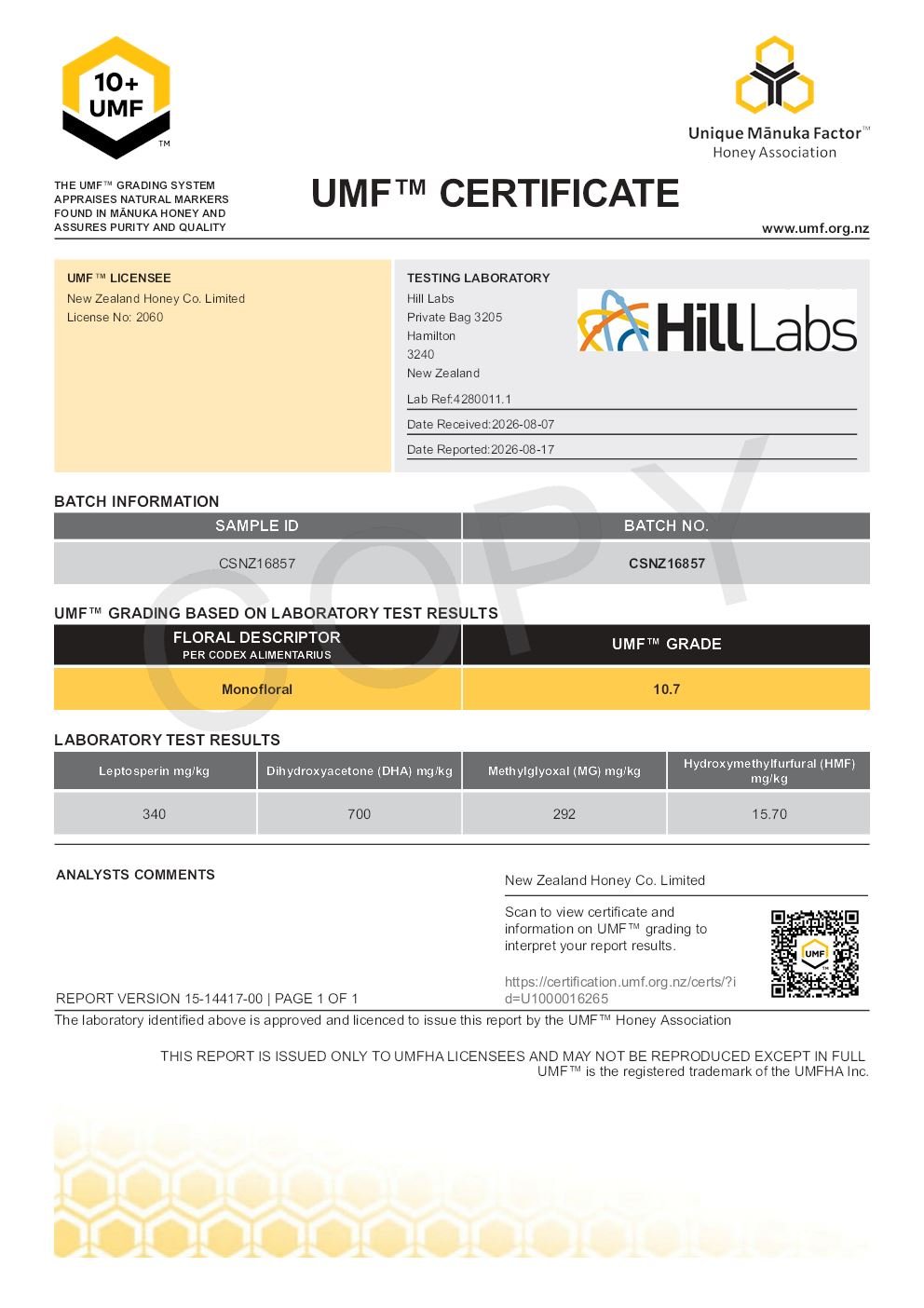
UMF™ Certificate: Batch ID: #CSNZ16857
Testing Laboratory

Valid Certificate Search
Monofloral
UMF™ GRADE
10.7+

Product Verification
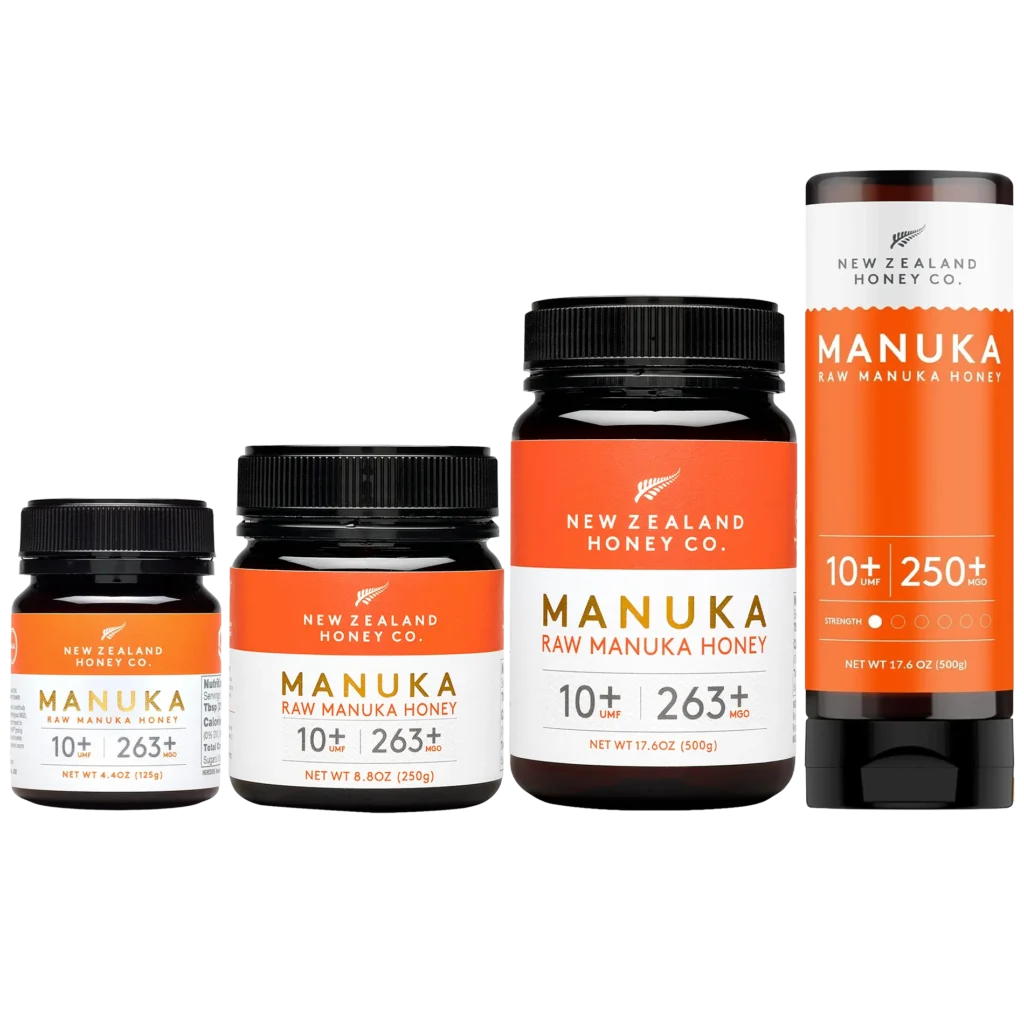
Compare your jar to the product shown below. If it doesn’t match, contact us.
Official UMF™ Certificate
This is the official UMF Certificate for the jar you have purchased.
Sample ID: CSNZ16857
CSNZ16857
Country of Origin
New Zealand
Click Image to Zoom
Region of Hives
Region where your Mānuka Honey was sourced:
This jar (Sample ID CSNZ16857) from New Zealand Honey Co. Limited has been independently tested by Hill Labs in New Zealand and carries a UMF grade of 10.7 — the UMF mark is an independent quality rating that represents Mānuka’s distinctive non-peroxide activity and verifies authenticity. The laboratory results show MGO (Methylglyoxal) at 292 mg/kg, which is the chemical indicator commonly used to describe antibacterial activity; at this level the honey is classed as a lower-strength Mānuka, well suited to everyday use such as spreading, baking, sweetening drinks, and general skincare routines. Leptosperin is reported at 340 mg/kg, a botanical marker that supports this product’s provenance as genuine Mānuka. No DHA value is shown on the certificate; DHA is the natural precursor that converts into MGO as honey matures, so its absence simply means DHA wasn’t reported rather than implying any issue. New Zealand Honey Co. Limited is a trusted UMF licensee, and the Hill Labs test gives you independent assurance of quality and authenticity.
In short: A genuine, everyday-strength Mānuka (UMF 10.7, MGO 292) from a trusted NZ producer — perfect for daily culinary use and skincare favourites.
This certification confirms the authenticity and quality of your Mānuka honey purchase.
All testing performed by independent, accredited laboratories.
This Mānuka honey is

Mānuka Honey Certification Details
Sensory Profile
Colour
Flavour
Texture
Mānuka Honey FAQ
Why is this honey so expensive?
It’s harvested in remote areas of New Zealand and undergoes rigorous independent testing for quality, purity, and potency — all of which adds cost. Rarity and global demand also play a role.
The colour of my honey looks different. Why?
Colour can vary naturally by batch and region. It doesn’t indicate strength or efficacy; a high-MGO honey can be light, and a lower-MGO honey can be dark and visa-versa.
My honey is too hard/runny. What’s wrong?
Temperature affects viscosity. To soften, leave it somewhere warm. To firm, chill in the fridge briefly.
This Mānuka Honey tastes bitter — is it off?
High-grade Mānuka can taste bold or slightly bitter due to potent bioactive compounds. Honey doesn’t spoil in the usual sense; gentle warming can reverse crystallisation.
How is Mānuka honey different from regular honey?
Mānuka contains higher levels of methylglyoxal (MGO) and carries a UMF™ rating based on independent lab tests of key markers.
New Zealand Honey Co. is committed to complete transparency. Sourced from hives across New Zealand’s rugged, untouched landscapes, the honey is UMF™ certified, fully traceable back to the hive, and free from GMOs, glyphosate residue, antibiotics, or additives.
The company follows a simple principle: nature is best preserved in its purest form.